
Mar 05, 2026
Industrial equipment preservation plays a vital role in the oil and gas industry, where high-value equipment is often stored for long periods before installation or deployment. From offshore drilling equipment to pipelines, valves, turbines, and large mechanical assets, these components require proper protection to maintain their reliability and operational readiness. Without effective preservation strategies, valuable equipment can suffer from corrosion, contamination, and deterioration, leading to costly repairs and operational delays.
In large-scale oil and gas projects, equipment may be manufactured in one location, transported across countries, and stored for months or even years before installation. During this period, environmental factors such as humidity, dust, temperature fluctuations, and salt exposure can cause serious damage to metal surfaces and sensitive components. Corrosion is one of the most common threats, especially for equipment exposed to marine environments or coastal storage facilities.
Proper preservation techniques help prevent these issues and ensure that equipment remains in optimal condition. The preservation process typically begins with a detailed inspection and cleaning of the equipment to remove contaminants such as dirt, oil residues, and moisture. After cleaning, protective coatings and corrosion inhibitors are applied to metal surfaces to prevent oxidation and rust formation.
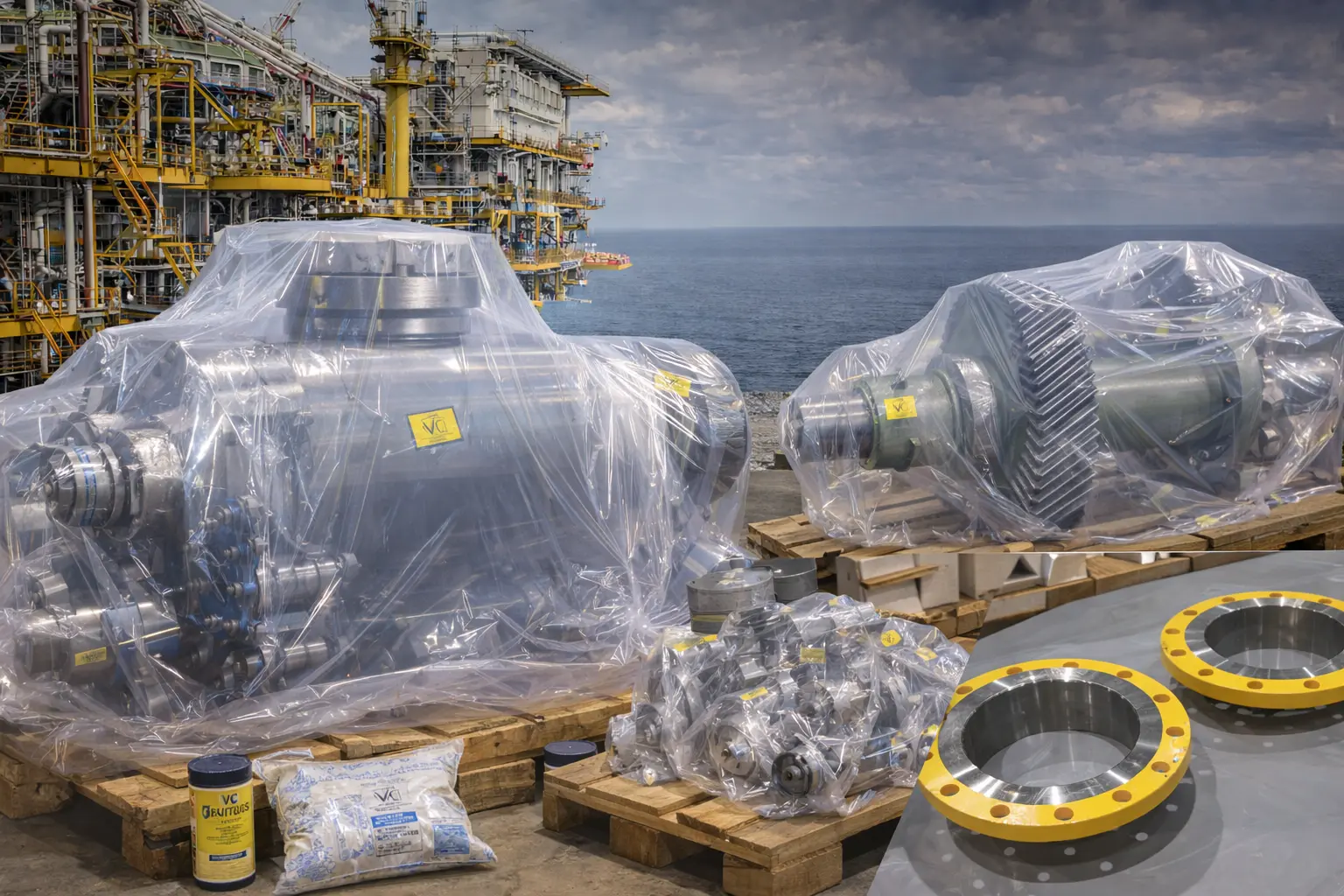
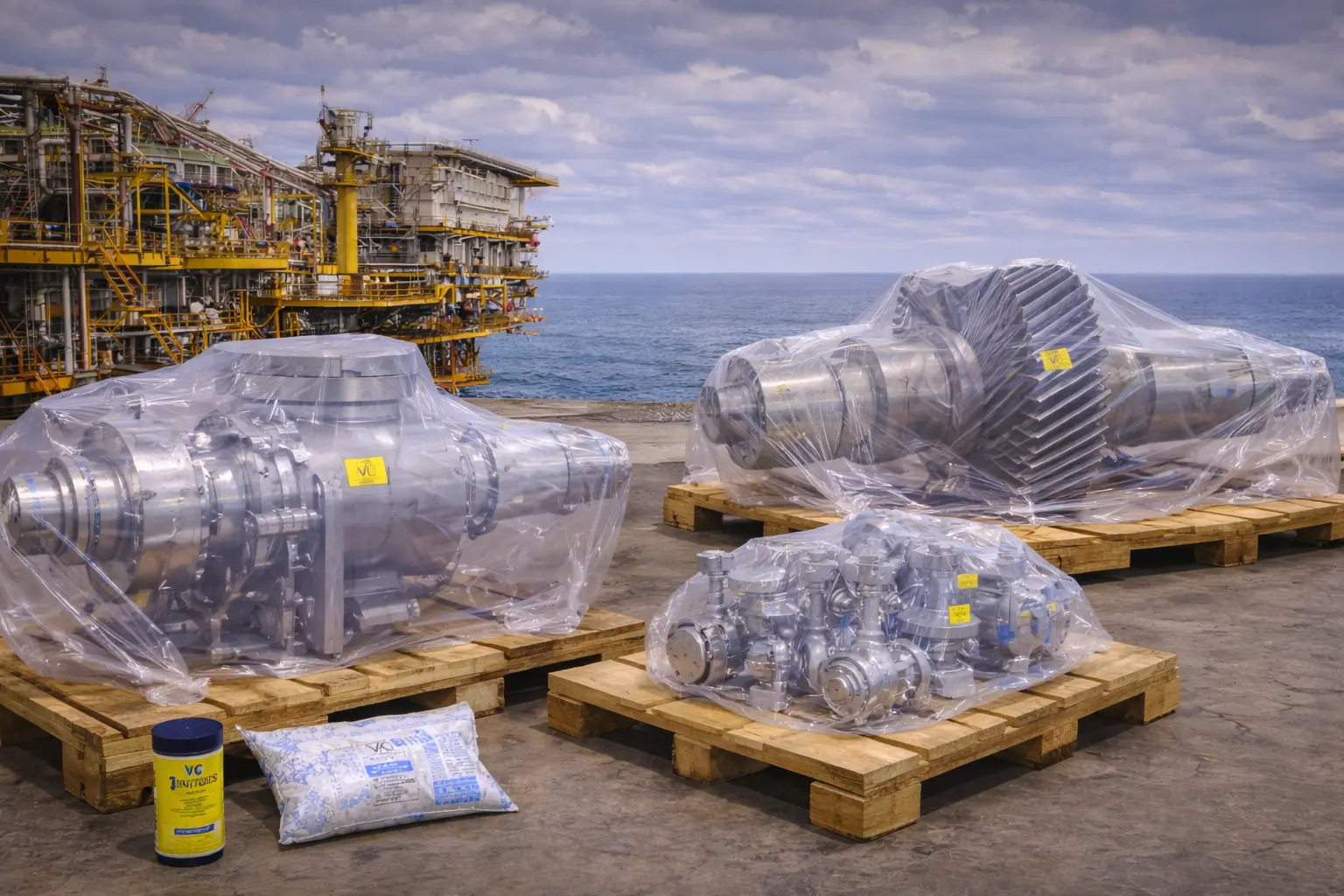
One of the most widely used preservation methods in the oil and gas industry is VCI (Vapor Corrosion Inhibitor) technology. VCI materials release protective molecules into the enclosed environment, forming a thin protective layer on metal surfaces that prevents corrosion. This technology is often combined with shrink wrapping, sealed packaging, and desiccants to create a controlled environment for stored equipment.
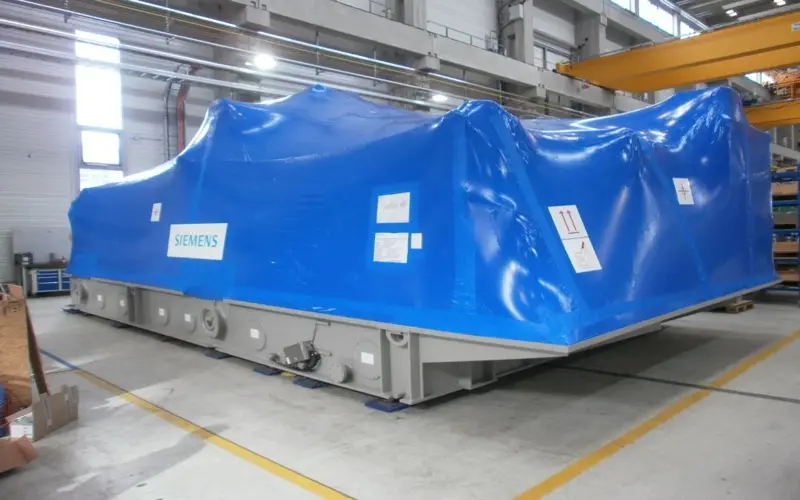
Large industrial assets such as blowout preventers (BOP), valves, gear assemblies, and drilling components are often wrapped using VCI shrink film and stored on wooden pallets. This method protects the equipment from moisture, dust, and external environmental conditions during storage and transportation.
Regular inspection is also an important part of the preservation process. Preservation teams conduct routine monitoring to ensure that protective materials remain intact and that no corrosion or damage has developed during storage. If any signs of deterioration are detected, maintenance actions can be taken immediately to prevent further damage.
Implementing a structured equipment preservation program offers significant benefits for industrial operations. It helps extend the lifespan of valuable equipment, reduce maintenance costs, and minimize the risk of equipment failure during commissioning. It also ensures that critical assets remain ready for installation and operation whenever they are needed.
In today's competitive industrial environment, effective equipment preservation is not just a maintenance activity—it is a strategic investment that protects assets and supports the long-term success of oil and gas projects.
Mar 05, 2026
Mar 05, 2026

HCC is dedicated to preserving your valuable assets and ensuring operational efficiency. Safety is a top priority, toolbox talks are conducted daily p...
Copyright © 2026 HCC. All rights reserved.